
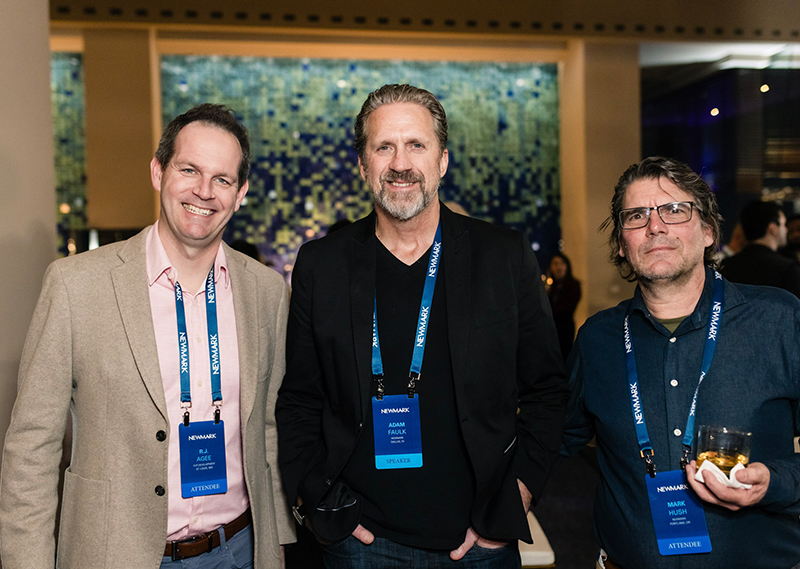
By R.J. Agee, President
I recently attended Newmark’s annual industrial conference, Industrial Velocity, which brought together more than 500 industry professionals to discuss the forces shaping the next phase of industrial real estate. The event gathered developers, occupiers, investors, brokers and service providers to examine the macro trends, operational realities, and emerging opportunities across the sector.
As promised, the event delivered conversations about capital markets, supply chain evolution, infrastructure, energy, and the continued transformation of logistics facilities. But what stood out most was how interconnected these themes have become. Industrial real estate is no longer just about buildings and land — it’s about ecosystems. Below are my top 5 takeaways.
1. Industrial Development Demands Precision
While the pandemic-era surge in industrial demand has softened, the long-term outlook remains healthy. Many speakers noted that occupiers are still expanding footprints, but they are doing so with much greater precision.
Today’s users are prioritizing:
- Locations with strong labor pools
- Access to transportation infrastructure and ports
- Reliable power capacity
- Buildings designed for automation and high throughput
In other words, the quality of the asset and the functionality of the location matter more than ever. The days of “build it and they will come” appear to be behind us.
2. Power Has Become One of the Industry’s Biggest Constraints
One of the most discussed topics at the conference was energy, specifically the availability and delivery timelines of electrical power.
Between the growth of advanced manufacturing, cold storage, robotics, and data infrastructure, industrial businesses are placing dramatically higher demands on power infrastructure. In many markets, the ability to secure power is becoming just as critical as securing land or financing.
For developers and investors, this means early engagement with utilities and municipalities is increasingly essential. Power availability may ultimately dictate which sites move forward and which ones don’t.
3. Manufacturing Is Driving a New Wave of Industrial Development
Another recurring theme was the continued reshoring and nearshoring of manufacturing.
Federal incentives, supply chain resiliency concerns, and geopolitical shifts are all pushing production closer to North American markets. This has significant implications for industrial real estate:
- Larger manufacturing footprints
- Increased demand for specialized facilities
- Greater need for supplier ecosystems near production hubs
This trend is not just adding square footage — it’s reshaping the type of industrial facilities being built.
4. Technology Is Transforming Logistics Facilities
Prominent themes at the conference included automation, robotics, and AI. Modern logistics facilities are increasingly technology platforms as much as they are real estate assets.
Developers are having to account for:
- Higher clear heights
- Increased power requirements
- Greater trailer and parking capacity
- Layouts designed for robotic picking and sorting systems
These changes push the boundaries of what “standard” industrial buildings look like.
5. Relationships Matter More Than Ever
Despite all the talk about technology and infrastructure, one of the most valuable aspects of the conference was the opportunity to connect with peers across the industry. Events like this remind you how collaborative the industrial ecosystem really is. Developers, brokers, investors, engineers, contractors, and end users all play critical roles in bringing projects to life.
The ability to exchange ideas, compare market perspectives, and build relationships remains one of the biggest drivers of opportunity in our industry.
Final Thoughts
Velocity was an apt name for the conference. The industrial sector continues to evolve quickly as technology, infrastructure investment, and supply chain strategies reshape how goods are produced and delivered. Innovation and collaboration are increasingly central to navigating that change.
For those of us involved in industrial development, the message was clear: The fundamentals remain strong, but success will increasingly depend on understanding the broader ecosystem — from power and infrastructure to technology and workforce.
It was a great event, and I look forward to seeing how these themes continue to play out across the markets we serve.
Share This Story. Choose Your Platform!